

Data centers are becoming a conundrum for state policymakers.
As repositories for terabytes of digital images, information and artificial intelligence applications, they are both home to “the cloud” and key to the digital economy. They also can provide jobs and property tax revenue in communities needing both.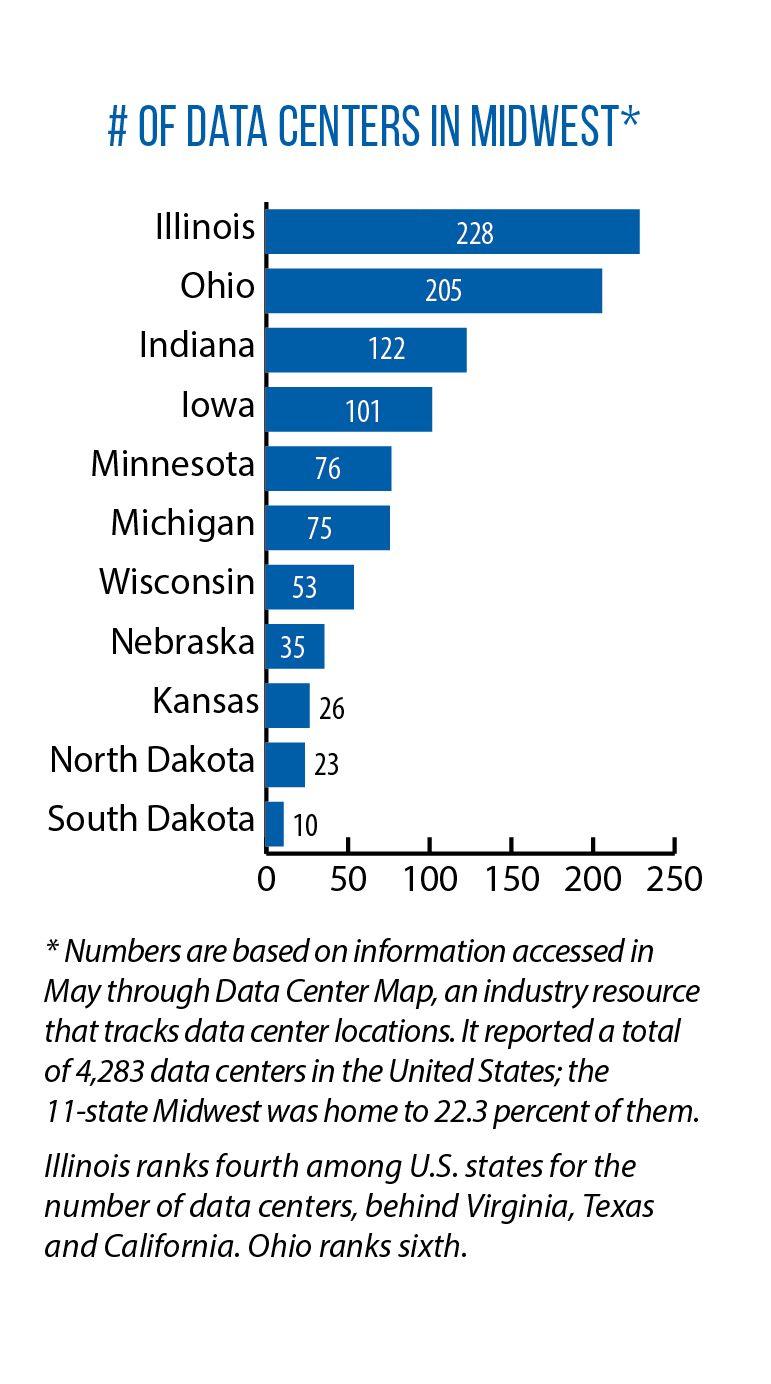
But their proliferation and need for plentiful power and water have sparked concern from voters to city halls to state capitols and beyond.
In the Midwest, only a few years ago, much of the talk in the region’s legislatures centered on tax incentives to attract data centers. More recently, attention has turned to potentially scaling back those incentives, ramping up regulation and oversight, or even halting projects altogether.
Meanwhile, communities across the region are becoming the homes of new data centers. Many more projects are coming soon.
Among Great Lakes states, the number of data centers is expected to increase by 41.9 percent over the next few years, a figure based on projects being planned or already under construction, according to a January 2026 study prepared for the Joyce Foundation.
Illinois and Ohio have the region’s largest number of planned projects; by 2030, data centers’ share of total electricity demand in those two states are expected to reach 16 percent and 11 percent, respectively, the study says.
A separate analysis from the Electric Power Research Institute estimates the share to exceed 20 percent in Indiana, Iowa and Nebraska.
Brad Teitz, director of state policy for the Data Center Coalition, says the industry is open to reasonable state regulation as digital infrastructures continue to get built out.
“Quite frankly, a balanced kind of approach to this could lead to greater certainty and stability for the industry,” he notes.
For example, Tietz says the use of “large-load tariffs” (the use of specialized terms, conditions and rates) and more stringent water-use regulations are workable, as long as they’re applied to all large industrial users. But as legislatures craft new laws, he cautions against having a “monolithic view of the industry.”
“We really can’t treat a 30- or 50-megawatt [GW] data center the same as a gigawatt-plus data center,” he says.
This article, based on interviews with Midwest lawmakers and a regionwide analysis of legislative activity, explores five common approaches under consideration this year on data center policy.
The post Carrying the load: How states are planning for growth in data centers appeared first on CSG Midwest.