On May 23, 1788, South Carolina became the eighth American colony to ratify the U.S. Constitution.
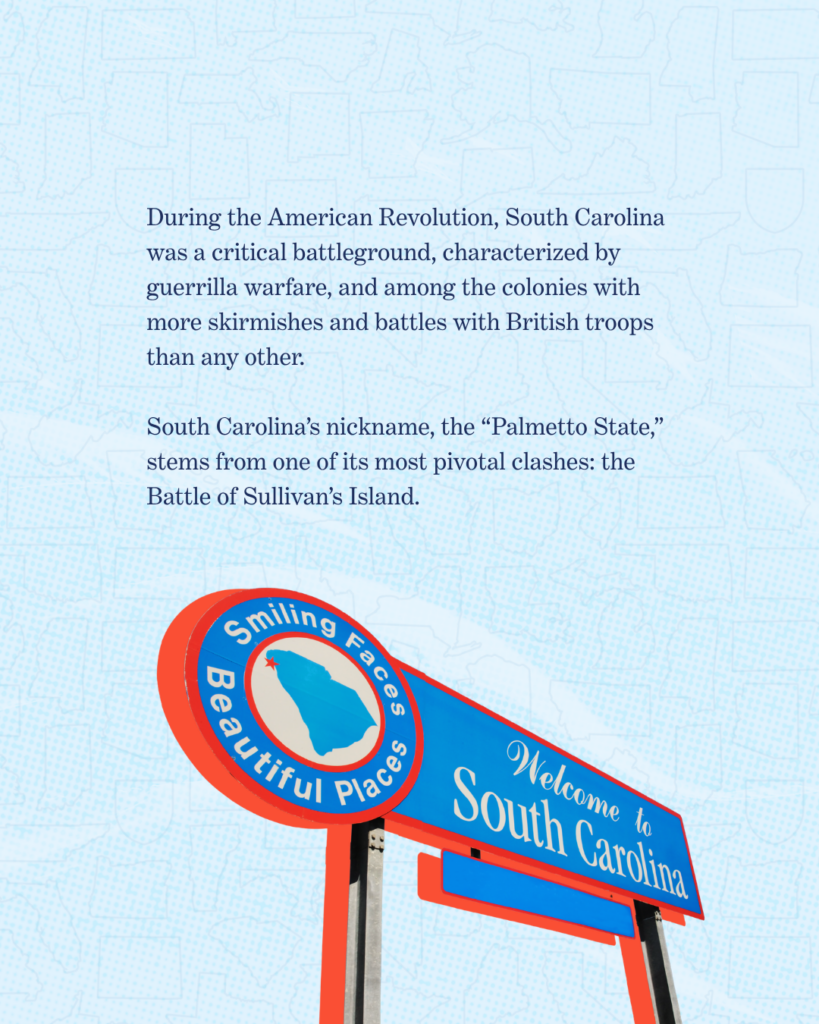
During the American Revolution, South Carolina was a critical battleground, characterized by guerrilla warfare, and the site of more skirmishes and battles with British troops than any other colony. South Carolina’s nickname, the “Palmetto State,” stems from one of its most pivotal clashes: the Battle of Sullivan’s Island. Fort Sullivan was hastily erected on the island as the British advanced upon Charleston and was built primarily from palmetto logs. Owing to their spongy nature, the logs absorbed British cannon fire rather than collapsing, helping Patriot forces repel several British gunships closing in on the city.
Prior to industrialization, South Carolina’s economy was largely agricultural, with tobacco, cotton and rice serving as its chief crops. In more recent times, its economy has transitioned toward manufacturing, with South Carolina now leading the country in automotive exports, thanks to the arrival of several German automotive companies, including BMW, Mercedes and Volvo.
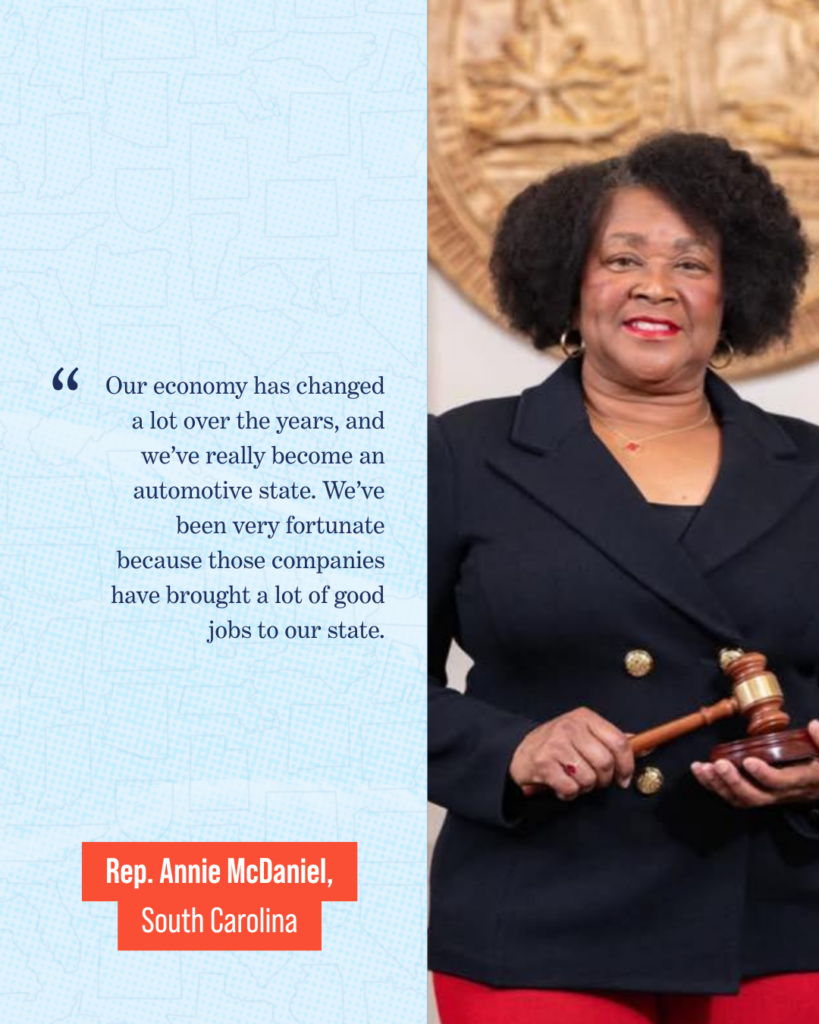
“Our economy has changed a lot over the years, and we’ve really become an automotive state,” said Rep. Annie McDaniel, who represents the 41st District and is a member of the 2021 Center for the Advancement of Leadership Skills (CALS) class, a flagship CSG South leadership development program. “We’ve been very fortunate because those companies have brought a lot of good jobs to our state.”

Tourism is a key economic driver in South Carolina, supported by its celebrated beaches, Southern cuisine and historic cities.
Iconic destinations such as Hilton Head, Myrtle Beach, Isle of Palms, Folly Beach and Hunting Island State Park highlight the state’s coastal appeal. But another recreational draw, golf, has helped establish South Carolina as a tourism mecca. Home to more than 350 golf courses and several high-profile PGA tour tournaments, South Carolina has cemented its reputation as a premier golf destination, both nationally and globally.
“Golf is huge here,” McDaniel said. “It was once mostly located along the coast, but over the years has migrated all over the state.”
Another tourism draw is the city of Charleston, renowned for its rich history, antebellum architecture, exquisite Southern cuisine and coastal charm.
“There’s so much to love about Charleston, and you can find something happening almost on every corner,” McDaniel said. “It has beautiful hotels, phenomenal shopping, tours that relate the city’s history, and our lovely plantation-style homes, including Rainbow Row and others. If there is a downside to the city, it’s parking — it can be challenging. So I usually stay on the north side and just take the bus into town.”
Charleston also is home to the Patriots Point Naval & Maritime Museum, where visitors can tour World War II-era naval vessels, including the aircraft carrier USS Yorktown and the destroyer USS Laffey, as well as nearly two dozen military aircraft and other artillery.
South Carolina is also known for its food, particularly its barbecue and signature mustard-based “Carolina Gold” sauce. In 2014, barbecue was designated the state’s official picnic cuisine. Another local favorite breakfast fare and snack is fatback, which McDaniel characterized as “pork fat sliced thin and cooked like bacon.”
“The crispier the better, at least that’s how I enjoy it,” McDaniel said, adding that fatback can be found all over the state’s restaurants and convenience stores.
For those inclined to spicier fare, South Carolina has you covered: It’s home to some of the nation’s hottest peppers, such as the Carolina Reaper, which was certified by Guinness World Records as the world’s spiciest until a few years ago when it was surpassed by Pepper X, developed by the same South Carolina-based PuckerButt Pepper Company. “We love our spicy food, and I do too,” McDaniel said. “And I know when to stop eating it too because my nose starts running and forehead is sweating.”