Delaware earned itself the nickname “The First State” when, on Dec. 7, 1787, it became the first of the American colonies to ratify the U.S. Constitution.
Delaware’s place at the vanguard of this democratic experiment might not have happened at all were it not for a famous midnight horse ride made on July 1, 1776, by Caesar Rodney. One of three Delaware delegates serving in the Continental Congress, Rodney was in Dover when he got word the other delegates were deadlocked in their vote for independence. To break the tie, Rodney climbed onto a horse and raced more than 70 miles through a thunderstorm to reach Philadelphia, where he cast the deciding vote for independence, reputedly still wearing his boots and spurs — a feat commemorated in 1999 on the Delaware State Quarter.
As a state, Delaware is distinguished in no small measure by its size: It’s the second smallest state in the Union (undersized only by Rhode Island), and it has the fewest counties (three). But don’t let its diminutive stature fool you: It’s also the sixth most densely populated state, boasting more than 442 people per square mile, and all without hosting a single city of more than 100,000 residents, according to the 2010 U.S. Census.

Interestingly, Delaware’s size also played a role in the founding of a holiday unique to Delaware (or at least to those in Sussex County). Historically, during elections, voters in Sussex County traveled to the county seat in Georgetown to cast their ballot. Two days later, these same voters would return to hear the election results — a tradition that continues to endure, now called “Return Day,” and celebrated every two years, said Delaware Sen. Brian Pettyjohn, the Senate minority whip and a 2023 CSG Henry Toll Fellow.
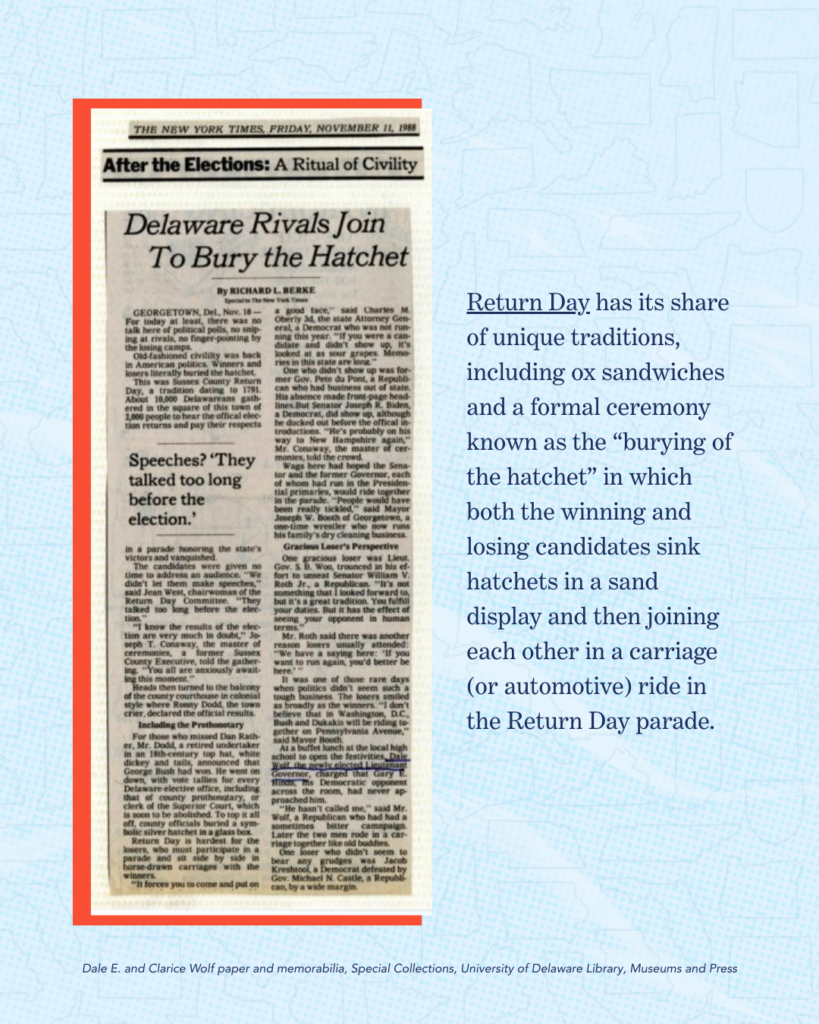
Return Day has its share of unique traditions, including ox sandwiches and a formal ceremony known as the “burying of the hatchet” in which both the winning and losing candidates would participate, sinking hatchets in a sand display and then joining each other in a carriage (or automotive) ride in the Return Day parade.
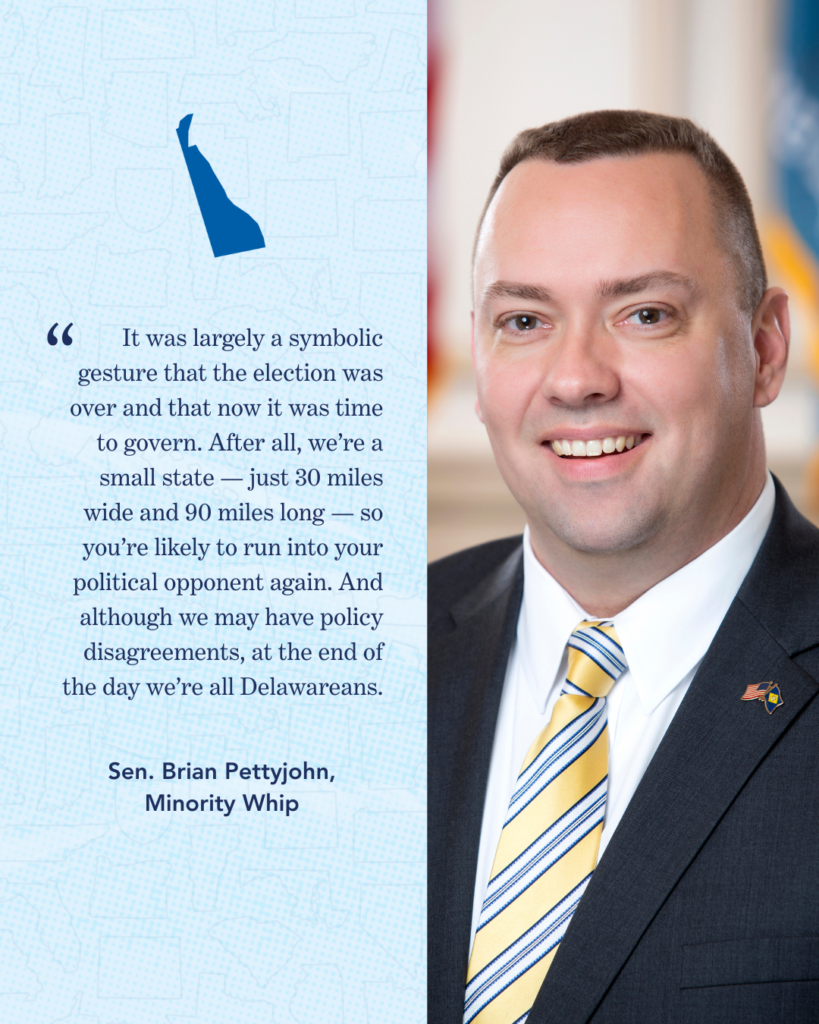
“The winners of the election face forward, and the losers face backward,” Pettyjohn said. “It was largely a symbolic gesture that the election was over and that now it was time to govern. After all, we’re a small state — just 30 miles wide and 90 miles long — so you’re likely to run into your political opponent again. And although we may have policy disagreements, at the end of the day we’re all Delawareans. And we want to close the chapter on the campaign and get down to the business that we’re elected to do.”