On Dec. 12, 1787, the Commonwealth of Pennsylvania became the second American colony to ratify the U.S. Constitution.
Nestled in the middle of the 13 colonies, Pennsylvania earned itself the nickname “The Keystone State” for its pivotal role in holding the early Union together — both economically and politically — during the Revolutionary era. And considering Pennsylvania’s contributions to American independence, it’s not hard to see why:
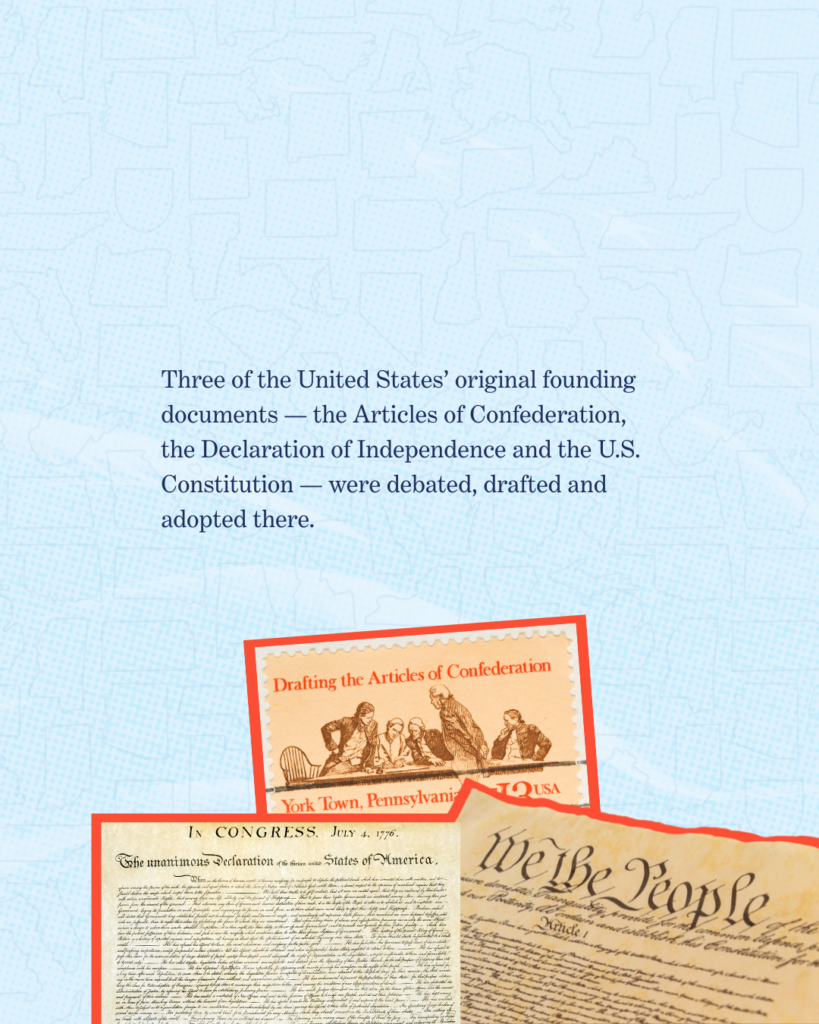
- Three of the United States’ original founding documents — the Articles of Confederation, the Declaration of Independence and the U.S. Constitution — were written and ratified there.
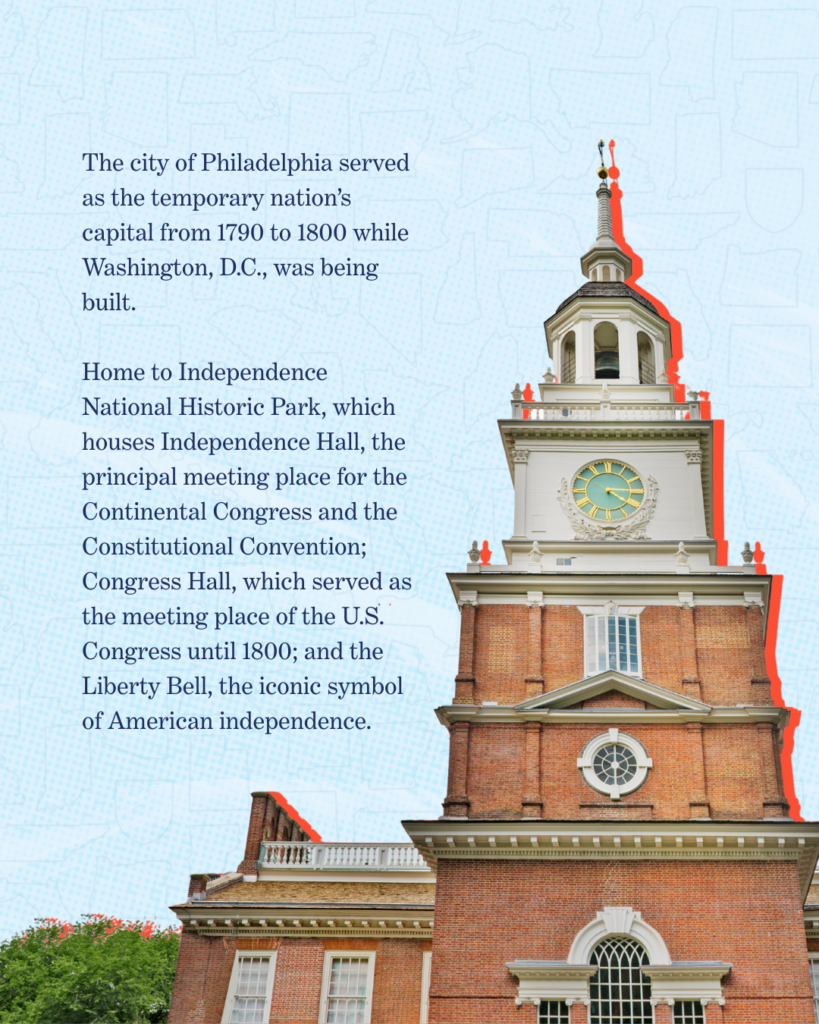
- The city of Philadelphia served as the nation’s capital from 1790 to 1800 while Washington, D.C., was being built.
- Philadelphia likewise is home to Independence National Historic Park, which houses Independence Hall, the principal meeting place for the Continental Congress and the Constitutional Convention; Congress Hall, which served as the meeting place of the U.S. Congress until 1800; and the Liberty Bell, the iconic symbol of American independence.
“Pennsylvania is a very special place,” said Pennsylvania Rep. Liz Hanbidge, who represents the 61st District and is a 2022 CSG Toll Fellow. “The whole area around Independence Hall in Philadelphia is astonishingly nice and so easily accessible to the public. It’s just an incredible opportunity to really feel America’s history and explore the founding ideals of democracy.”

Pennsylvania is a manufacturing mecca, home to many of America’s most enduring brands, such as Zippo lighters, Harley-Davidson motorcycles, Heinz ketchup, Crayola crayons, Tastykake snacks, Martin guitars and Yuengling beer.
Often overlooked is the state’s surprisingly large agricultural footprint, boasting more than 59,000 farms and the largest rural population of any state in the nation. To celebrate this rich agricultural heritage, the city of Harrisburg hosts the annual Pennsylvania Farm Show, a “one-of-a-kind” event filled with hundreds of exhibits, foods and vendors showing off the latest and greatest in gleaming farm machinery.
“It’s the largest indoor agricultural event in the country, and it’s amazing,” Hanbidge said. “We have everything from a cow-calving corner to baby goat petting to all sorts of races and showmanship classes. It’s just a massive, incredible homage to a really important part of Pennsylvania’s culture and economy.”
In 2019, Pennsylvania officially recognized the “snot otter” as the state’s official amphibian. Known more formally as the eastern hellbender salamander (nicknamed “snot otter” for its slimy mucus coating), the amphibian came to legislators’ attention via high school students who were studying ways to protect the Chesapeake Bay and noted that the large salamanders serve as an indicator species, meaning their numbers can serve as a proxy for a water body’s environmental health.
“If the eastern hellbender gets sick in a river, it means that the river is not healthy,” Hanbidge said. “I was tickled by the whole thing because it was such a great way to have conversations with kids about the legislative process and how it touches on the world around them. And that’s definitely something every legislator needs to be thinking about when they’re talking to their youngest constituents because some of our kids have great ideas.”